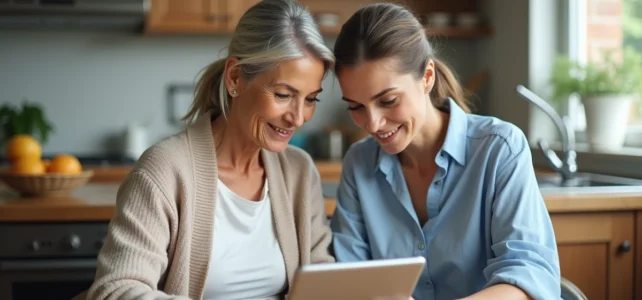
A parent who forgets to take their medication, a neighbor who hasn’t left their home for weeks, a loved one struggling to climb their stairs. These situations are experienced by millions of French families. Solutions exist, but they are not limited to choosing between staying at home and moving to a nursing home. Between these two poles, a whole range of solutions to support seniors in their daily lives deserves to be explored.
Teleconsultation and remote medical follow-up for seniors
Have you ever accompanied an elderly parent to the doctor for a simple prescription renewal? The journey, the wait, the fatigue: for a person with reduced mobility, each consultation becomes a logistical challenge.
See also : How to Get Easy and Fast Credit: Guide and Comparison of the Best Solutions
Teleconsultation changes the game. It now allows for treatment follow-up, quick medical advice, or managing a minor emergency without leaving home. For isolated seniors in rural areas, it is often the only way to access a doctor without excessive delay.
This mode of consultation does not replace a physical examination. It complements it. A primary care physician can, through a screen, adjust a dosage, identify a change in general condition, or refer to an in-office consultation if the situation requires it. Coordination between the doctor, the home nurse, and the family is thus facilitated. Platforms like Aide Seniors list the available resources to organize this daily health support.
Related reading : The best solutions to finance training when you are in a permanent contract

Intermediate housing: senior co-housing as an alternative to isolated living
Staying at home is a topic everyone talks about. Intermediate housing, much less so. Yet it is a concrete option for those who do not want to live alone or enter a medical facility.
The principle of co-housing is simple: each resident has their own individual accommodation but shares common spaces and benefits from a secure environment. The 2025 social impact report from Vivre en Béguinage documents this model, which has been developed for over fourteen years in France.
What distinguishes co-housing from a traditional senior residence
Co-housing is based on solidarity among neighbors, not just on service provisions. Residents help each other daily: a hand with shopping, an alert in case of unusual absence, a shared meal. This human dimension directly contributes to preventing isolation.
The cost in senior residences can vary significantly depending on the region and level of services. Co-housing generally offers a more affordable framework, with integrated human support rather than an à la carte service catalog.
Adapting daily life without infantilizing: the role of family caregivers
Supporting a senior in their daily life means finding a delicate balance. Too much help removes autonomy. Not enough exposes them to real risks. Family caregivers are on the front line of this dilemma.
The most common trap is to do “for them” out of concern for efficiency. Preparing meals because it’s quicker, managing paperwork because it’s simpler. In just a few months, the elderly person loses their bearings and abilities, not due to illness, but due to gradual disinvestment.
Three concrete guidelines to preserve autonomy
- Allow the necessary time for each daily task. An elderly person who takes twenty minutes to dress themselves retains a motor and cognitive skill that systematic help would eliminate.
- Adapt the environment rather than habits: grab bars in the bathroom, enhanced lighting in hallways, accessible storage without a step stool. Home modifications reduce the risk of falls without changing lifestyle.
- Distinguish between tasks to delegate (heavy administration, repairs) and those to support (shopping, cooking, outings). The caregiver is not a service provider but a facilitator.
The mental load on family caregivers is real: organizing care, coordinating providers, managing administration. This pressure can lead to burnout if not shared with professionals.
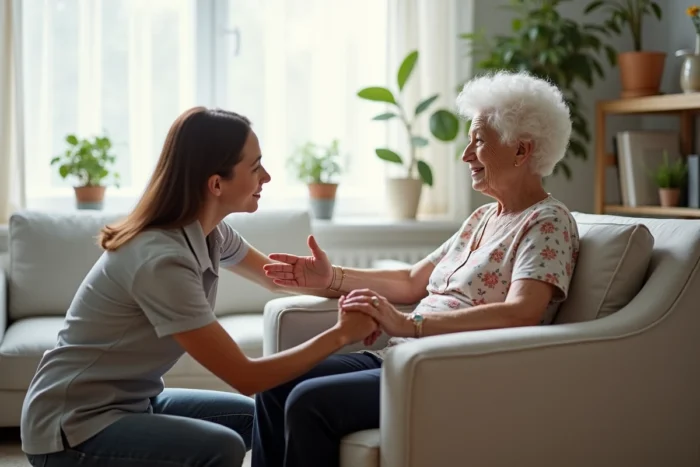
Seniors still in employment: support too often overlooked
Support solutions for seniors almost always focus on retirees. Workers over 55 or 60 years old remain in a blind spot. Recent regulatory changes encourage companies to keep older employees active longer, adapt positions, and enhance health prevention at work.
In practical terms, this means adjusted working hours, tailored ongoing training, and enhanced medical follow-up. For a senior still in a job, these measures directly influence daily quality of life, mental health, and sense of social utility.
Why does this topic matter in an article about supporting seniors? Because the transition between active life and retirement is a vulnerable period. A senior well-supported in their last years of work approaches retirement with better physical and psychological health. Support does not begin on the day of retirement.
Teleassistance and meal delivery: complementary bricks
These two services are well-known, but their effectiveness depends on how they integrate into a comprehensive system.
Teleassistance is not only useful in case of a fall. It reassures the senior and their loved ones daily. Meal delivery does not just solve a nutritional problem: the daily visit from the delivery person constitutes a minimal but regular social link, sometimes the only human contact of the day for an isolated person.
The effectiveness of these systems relies on their coordination. A teleassistance service connected to the primary care physician, a meal delivery service adapted to specific dietary needs, a home helper informed of the person’s habits: it is this articulation that makes the difference between a stack of services and true support.
The choice between service provider, mandataire, or direct employment of a caregiver depends on the senior’s level of autonomy and the family’s potential involvement. No formula is universally better than another. The right solution is the one that adjusts to the real situation, not to a theoretical model.