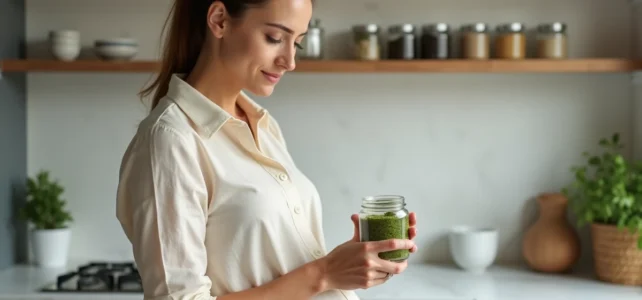
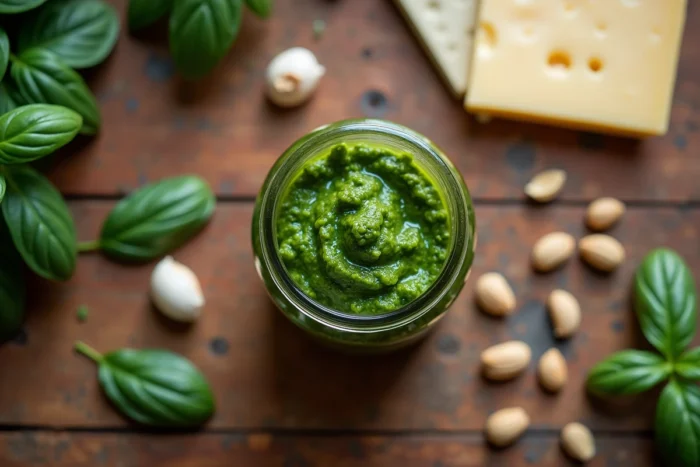
Pesto is a sauce made from olive oil, basil, garlic, pine nuts, and cheese (parmesan or pecorino). During pregnancy, each of these ingredients poses a distinct health question. Fresh basil is a raw plant exposed to bacterial contamination, cheese may be made from raw milk, and the storage after opening a jar promotes the proliferation of Listeria. Understanding these mechanisms allows you to continue eating pesto while pregnant without taking unnecessary risks.
Fresh basil and raw vegetables: an underestimated risk in pesto
Most articles about pesto during pregnancy focus on cheese or garlic. Fresh basil, however, is rarely mentioned as a source of danger. Fresh herbs (basil, coriander, parsley) are among the raw vegetables associated with episodes of foodborne infections, particularly salmonella and E. coli.
Further reading : Playful and Creative Ideas to Spark Toddlers' Curiosity
The WHO emphasizes the rising risks associated with contaminated raw plant foods, especially among vulnerable individuals, including pregnant women. Basil, with its fragile leaves that are difficult to clean thoroughly, concentrates this issue.
A homemade pesto prepared with basil simply rinsed under water does not guarantee the elimination of these pathogens. To reduce the risk, the leaves should be soaked for several minutes in vinegar water and then rinsed thoroughly. Even better: incorporating pesto into a heated dish neutralizes almost all bacteria present on raw vegetables.
Recommended read : How to Get Easy and Fast Credit: Guide and Comparison of the Best Solutions
When looking to consume pesto while pregnant, the distinction between raw use (as a cold topping on pasta) and cooked use (mixed into a casserole or hot sauce) radically changes the level of safety.
Raw milk cheese in pesto: identifying the source of danger
Parmesan and pecorino romano are classic ingredients in pesto. These hard cheeses, even when made from raw milk, present a low risk of listeriosis due to their long aging period and low moisture content. The bacterium Listeria monocytogenes does not thrive under these conditions.
The real problem arises with pestos containing soft cheeses or fresh cheeses made from raw milk. Some modern recipes replace parmesan with ricotta, fresh goat cheese, or feta to achieve a creamier texture. These substitutions significantly increase the risk of contamination.
Industrial pesto or homemade pesto: the role of pasteurization
An industrial pesto sold in a jar has undergone a thermal treatment (pasteurization or sterilization) that destroys Listeria and other pathogens. As long as the jar is sealed and stored according to the instructions, this type of pesto is considered safe during pregnancy.
After opening, the situation changes. An opened jar of pesto should be consumed within a few days, stored in the refrigerator below 4 °C. Listeria multiplies in cold conditions, unlike most bacteria, making leftover pesto particularly sensitive in the case of prolonged storage.
Homemade pesto, on the other hand, has not undergone any thermal treatment. It accumulates risks: raw basil, potentially raw milk cheese, and lack of pasteurization. To make it safer, there are two options: heat it in a cooked dish or replace sensitive ingredients with pasteurized versions.
Pestos with superfoods and hemp: formulas to check during pregnancy
The pesto market has diversified. There are now pestos made with kale, spirulina, hemp seeds, turmeric, or even enriched with plant proteins. These formulations raise specific questions during pregnancy.
- Hemp pestos contain seeds or food-grade hemp oil. These products do not contain significant amounts of cannabidiol (CBD), but some “wellness” pestos explicitly add CBD. However, dietary supplements containing CBD are not authorized in the European Union, as noted by Vidal.
- Pestos enriched with spirulina or seaweed may contain high levels of iodine or heavy metals depending on their origin, which poses a risk to the fetus’s thyroid.
- Pestos made from cashews, almonds, or sunflower seeds (instead of pine nuts) do not pose any particular health issues, provided that allergens are checked and the quality of preservation is ensured.
In light of these new recipes, reading the full list of ingredients becomes essential. A “healthy” pesto is not automatically suitable for pregnancy. The absence of raw milk cheese does not compensate for the presence of an ingredient that has not been evaluated for pregnant women.
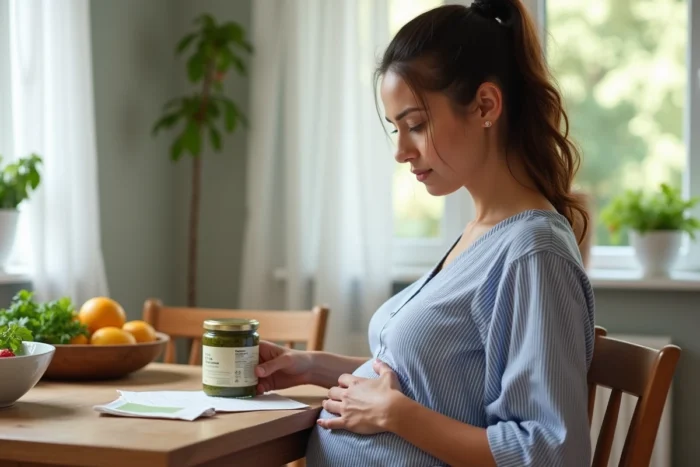
Concrete precautions for eating pesto safely during pregnancy
The WHO recommendations summarized under the “5 keys to safer food” apply directly to pesto. Two of them are particularly relevant here: cooking food thoroughly and keeping food at safe temperatures.
- Prefer pasteurized industrial pesto, stored in the refrigerator, and consume it quickly after opening.
- Mix pesto into a hot dish (pasta casserole, heated sauce) rather than using it as a cold topping.
- For homemade pesto, wash the basil thoroughly in vinegar water and use only pasteurized cheese.
- Avoid pestos containing CBD, spirulina of uncertain origin, or any ingredient whose safety during pregnancy is not established.
These precautions do not turn the meal into a medical exercise. They reflect the same reflex applied to cold cuts or soft cheeses: identify the sensitive ingredient, check its treatment, adapt the preparation.
Pesto remains a nutritious food, rich in unsaturated fatty acids thanks to olive oil and pine nuts. Basil provides iron and vitamin K. By applying these few selection and preparation rules, it retains its place in a pregnant woman’s diet without compromising the baby’s health.