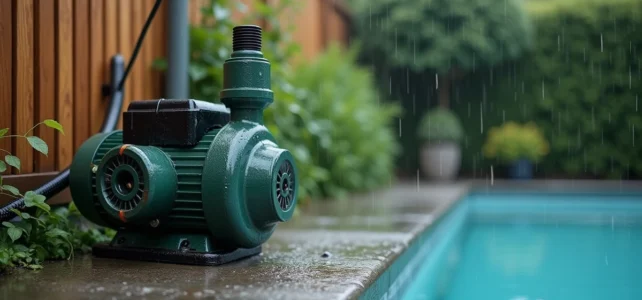
A filtration pump placed on a concrete slab, without shelter, with a storm approaching: we’ve all seen this setup at least once. The swimming pool pump in the rain is a topic that comes up every summer, and the answer depends as much on the model installed as on the electrical environment around it.
IP protection rating and the real limits of the swimming pool pump
Most swimming pool pumps sold in France have at least an IPX4 protection rating, which means they resist water splashes from all directions. A typical downpour falls into this category.
You may also like : The best solutions to finance training when you are in a permanent contract
This protection does not cover immersion or flooding of the motor housing. In practical terms, if water stagnates around the pump to the point of submerging the motor base, the IPX4 protection is no longer sufficient. Several experiences after severe storms show that as soon as the motor is submerged, the pump trips and often needs to be replaced.
One might wonder can you leave the swimming pool pump out in the rain without special precautions: the answer is yes for light rain, no as soon as the surrounding ground risks becoming saturated with water.
Related reading : Everything you need to know about the tram line 2 schedules in Nantes to reach the city center
Before relying on the advertised waterproofing, check the manual for your model. Some manufacturers explicitly state that permanent outdoor installation is not covered by the warranty.
Residual current device and thermal protection: the real safety net
The waterproofing of the housing is not everything. On-site, it is the electrical protection of the pump that determines whether a rainy episode turns into a serious breakdown or a simple temporary cut-off.
A properly calibrated residual current device cuts off the power as soon as it detects a current leak, for example, water seeping into the terminal block. Without this device, current continues to flow, and the motor burns out. The thermal protection integrated into some pumps adds a second layer: it cuts off the motor when it overheats, which happens if humidity causes a partial short circuit.
Here are the elements to check on your installation:
- A residual current device dedicated to the pool circuit, separate from the main electrical panel of the house, to prevent the trip from cutting off power to the entire home.
- Thermal protection integrated into the motor of the pump (mentioned in the manufacturer’s technical sheet).
- An electrical connection made with waterproof connectors and an outdoor-rated cable, no bare junctions under a simple plastic bag.
- An effective grounding of the entire hydraulic and electrical circuit of the pool.
If any of these elements are missing, the pump is not protected against a storm, regardless of its IP class.
Ground, drainage, and positioning: what really changes the game
We often see advice on protective boxes or resin shelters. These solutions work, but they do not solve the main problem: water stagnating at the base of the pump.
On clayey or poorly drained ground, sustained rain for two hours is enough to form a puddle around the technical room. If the pump is placed at ground level, it quickly sits in several centimeters of water. The protective box does not prevent this rise from below.
Elevate the pump rather than cover it
The most effective measure remains to place the pump on a raised support about fifteen centimeters above the finished ground, with a drainage slope that directs water away from the motor. A simple block base with a clean slab on top does the job.
The shelter (box, awning, closed technical room) protects from direct rain and limits the ambient humidity around the motor. The two approaches are complementary: elevating AND covering eliminates the vast majority of risks.
Ventilation of the technical room
A completely closed technical room poses another problem: condensation. The warm air released by the motor, combined with the ambient humidity, creates a corrosive environment for metal components. Planning for low and high ventilation in the box or shelter avoids this trap.
Home insurance and swimming pool pump damaged by rain
If the pump burns out after a storm, the reflex is to contact the insurance. Multi-risk home insurance policies generally cover damage related to a storm or declared natural disaster. However, damage caused by lack of protection or poor installation may be considered negligence.
This distinction also applies in rentals. When equipment is damaged by a weather event, the repair falls to the owner. If the damage results from a lack of maintenance or improper use (pump left unprotected in a flood-prone area, for example), it is the tenant’s responsibility to cover the replacement.
Keeping the manufacturer’s manual, installation invoices, and, if possible, photos of the setup helps prove that the installation was compliant at the time of the incident.
Filtration in the rain: turn off or keep running
Rainwater lowers the pH of the pool, brings debris, and dilutes the ongoing treatment. On this point, maintaining filtration during a downpour improves water quality by circulating pollutants towards the filter before they settle.
The only situation where turning off the pump is justified is during a storm with lightning risk. A nearby strike can damage the motor via a surge, even with a circuit breaker in place. If a storm is forecasted, turning off the circuit breaker for the pool circuit remains the most reliable precaution.
After the rainy episode, checking the water level of the pool (an overflow can drown the skimmers), controlling the pH, and restarting filtration on an extended cycle is enough to restore a correct balance.
A properly installed swimming pool pump, elevated and powered by a protected electrical circuit, can easily withstand regular rain. The real risk does not come from the drops falling on the cover, but from water rising from the ground and current flowing without protection.