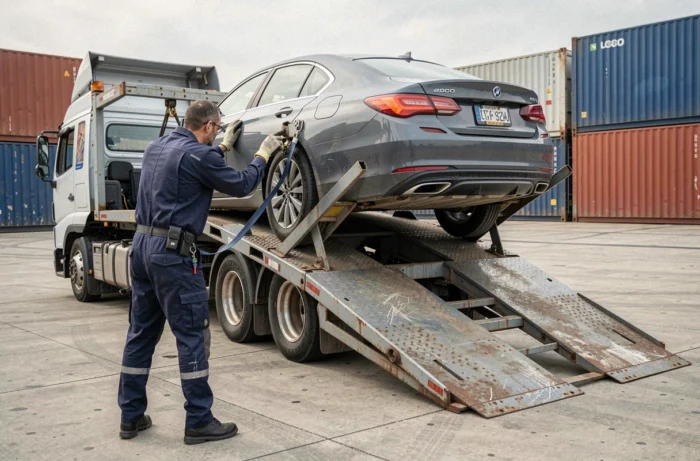
Comparing automotive transport solutions involves balancing cost, timing, and vehicle protection level. Depending on whether one is managing a corporate fleet or a one-time transfer between two individuals, the parameters change dramatically. Automotive transport utilizes distinct logistical modes, each with its own regulatory constraints, and recent European normative developments are reshaping the selection criteria.
Cost and Timing by Automotive Transport Mode
The differences in pricing and delivery times between the main transport modes depend on volume, distance, and service level. The table below summarizes the operational characteristics of each option for a journey within metropolitan France.
| Transport Mode | Capacity per Trip | Indicative Timing (France) | Protection Level | Main Use |
|---|---|---|---|---|
| Car Carrier (open truck) | 6 to 10 vehicles | 24 to 72 hours | Standard (exposure to weather) | Mass flows from factory to dealership |
| Closed Truck (enclosed) | 2 to 6 vehicles | 24 to 72 hours | High (protected bodywork) | Premium or collectible vehicles |
| Driving (road driving) | 1 vehicle | Same day to 48 hours | Variable (mileage wear) | Single delivery, short distance |
| Maritime Transport (container/RoRo) | Several hundred | Several weeks | High (container) to standard (RoRo) | Intercontinental import-export |
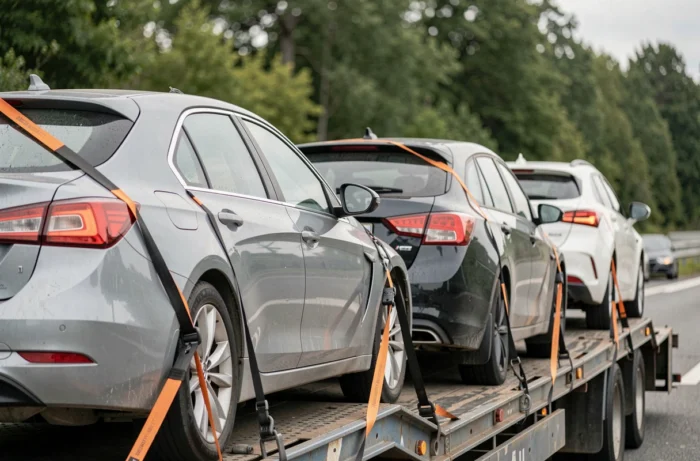
The car carrier remains the dominant mode for manufacturers and rental companies, as it shares costs across multiple vehicles. In contrast, driving is more expensive per kilometer but eliminates grouping delays, making it relevant for urgent inter-site transfers or deliveries to the end customer.
To explore available offers and compare providers, transport on Signal Auto brings together several solutions suitable for both individuals and professionals.

European CO₂ Regulation and Renewal of Car Carrier Fleets
The Regulation (EU) 2024/1610, which came into effect on July 1, 2024, imposes a trajectory for reducing CO₂ emissions for new heavy-duty vehicles compared to 2019 levels. The thresholds are clear:
- -15% over the period 2025-2029, which already affects car carrier truck orders placed this year
- -45% in 2030-2034, requiring a partial shift to alternative powertrains (CNG, hydrogen, electric)
- -65% in 2035-2039, then -90% starting in 2040, making conventional diesel nearly impossible in this segment
For a fleet manager in automotive transport, these thresholds change the profitability calculation for fleet renewal. Buying a diesel car carrier today means betting on an operational lifespan that may clash with the 2030 thresholds.
The most structured transporters are anticipating by testing electric carriers on short routes (logistics platforms to urban dealerships). On long-distance routes, alternatives remain limited by range and the charging network for heavy trucks.
Driver Safety and GSR2 Standard: What Changes for Vehicle Transport
Since July 7, 2026, the European GSR2 regulation mandates a driver distraction detection system (Advanced Driver Distraction Warning) on all new vehicles registered in the EU, including trucks and utility vehicles.
Specifically, a car carrier ordered after this date will be equipped with a camera facing the driver, coupled with an algorithm that triggers an alert in case of prolonged diverted gaze or signs of drowsiness. This system adds to those already mandatory since 2022 (autonomous emergency braking, lane departure warning).
For automotive transport companies, the impact is twofold. On one hand, accident rates should decrease on long trips where fatigue is the primary accident factor. On the other hand, the acquisition cost of new vehicles increases, and the maintenance of these electronic systems adds a line to the maintenance budget.
Criteria for Choosing an Automotive Transport Provider
Beyond the displayed price, several technical parameters separate a reliable provider from an opaque intermediary. Market data shows that customer satisfaction relies less on the gross rate than on the management of contingencies.
- Dedicated transport insurance: check the compensation ceiling per vehicle and exclusions (interior damage, mechanical parts). A transporter that does not clearly display its coverage deserves caution
- Real-time tracking: the geolocation of the truck or driver allows for anticipating delivery windows, which avoids unnecessary immobilization of a staff member on site
- Contradictory condition report at loading and delivery: a serious provider photographs each vehicle from multiple angles before departure. Without this document, any damage claim becomes difficult to assert
- Regulatory compliance of the transporter: transport license, technical inspection of carriers, ongoing training for drivers. The transporter registry is publicly accessible
A photographic condition report before departure protects against damage disputes. This is the criterion most often overlooked by individuals, and the one that generates the most disputes.
Driving or Car Carrier: Decision Based on Volume and Distance
Driving appeals due to its simplicity. A driver picks up the vehicle and delivers it while driving. No loading onto a platform, no grouping. The timing is short, sometimes within the same day for a regional trip.
Conversely, driving adds mileage to the odometer. For a new vehicle or a rental vehicle at the end of the contract, this wear has a residual cost measurable at resale. The car carrier preserves mileage, which protects resale value.
For corporate fleets that regularly transfer vehicles between agencies, optimization often involves a mix of both modes. Trips of less than 200 km by driving, inter-regional links grouped on car carriers. This division reduces transport costs while controlling mechanical wear.
New European environmental and safety constraints are accelerating the professionalization of the sector. A fleet manager renewing transport contracts benefits from checking the CO₂ compliance of the carriers used and the presence of GSR2 equipment on the recent vehicles of their provider.