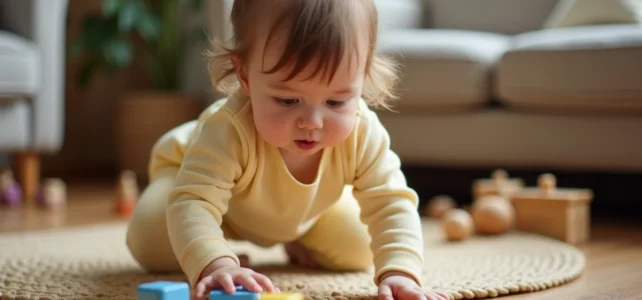
A two-year-old child does not need an activity program to be curious. They already are. The challenge for the adults accompanying them lies less in a lack of ideas than in managing their surroundings: the quantity of accessible toys, the rhythm of proposals, and the quality of the materials provided.
Recent research on the awakening of toddlers points in this direction, emphasizing free exploration and multi-sensory manipulation in spaces designed for 2 to 6-year-olds.
You may also like : Understanding Mortgage Release Fees: Steps, Costs, and Tips to Know
Balancing stimulation for toddlers: fewer toys, more curiosity
The temptation to multiply proposals is strong. A sensory bin in the morning, painting after nap time, a nature outing at the end of the day. This sustained rhythm starts from a good intention, but it can have the opposite effect: a saturated child flitting from one activity to another without ever engaging deeply.
The principle is simple. Reducing the number of accessible objects increases the duration of exploration for each one. Instead of leaving twenty games freely available, offering four or five and then rotating them every two weeks rekindles interest without additional purchases.
Read also : How to Watch Ozpov Video Streaming Easily and Safely
This balance also applies to adult intervention. Observing a child manipulating an object without intervening, resisting the urge to show “how it’s done,” allows space for trial and error. It is in this fumbling that curiosity takes root, not in demonstration.
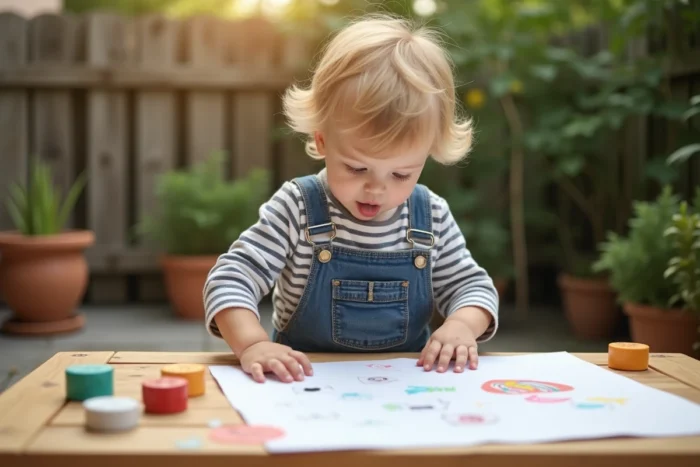
Resources dedicated to the world of early childhood, such as lespetitspoissontrouges.fr, offer approaches that align with this by focusing on materials designed to allow the child to explore at their own pace.
Nature play and gardening: awakening activities rooted in reality
The outdoors remains the richest and least expensive learning ground. Sorting seeds by size, planting cress on damp cotton, observing the growth of a plant each day: these seemingly repetitive actions engage attention, fine motor skills, and vocabulary.
Real mini gardening tools enhance engagement more than plastic toys that imitate gardening. A small metal watering can, a shovel of the right size, a lightweight rake: the child perceives the difference between a functional object and a decorative one. They invest differently when their tool is actually useful.
Creating an illustrated logbook with the child extends the activity indoors. Gluing a collected leaf, drawing the plant that has grown, noting the color of the day with a sticker: this back-and-forth between outside and inside anchors discovery over time.
- Observation of germination on damp cotton (cress, lentils), with daily visual recording.
- Sensory sorting of natural materials: smooth pebbles, rough bark, feathers, moss.
- Creating a small raised garden bed, accessible from the age of two with supervision.
Multi-sensory exploration at home: materials and layout
Not all homes have a garden. Sensory awakening also works in an apartment, provided the space is thought out differently. A dedicated corner, even small, with a rug on the floor and a few elements within reach is enough to create an exploratory environment.
Layout matters more than the number of activities offered. A sensory wall made from fabric scraps (velvet, burlap, felt), fixed at child height, offers weeks of manipulation. A bin filled with rice, dry pasta, or sand, with a few containers of different sizes, engages coordination and imagination without specific instructions.
The key lies in the variety of textures and temperatures rather than the variety of activities. The same sensory bin can evolve: warm water on Monday, cold water with ice cubes on Thursday, adding food coloring the following week. Transforming a single material rather than multiplying ten keeps curiosity active.
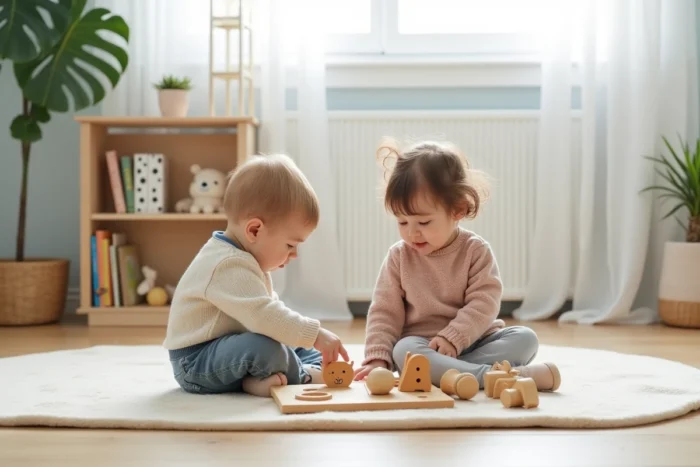
Everyday materials repurposed as awakening tools
Before purchasing specialized materials, an inventory of what already exists in the kitchen or living room often reveals underestimated resources:
- Colanders, funnels, and measuring cups for pouring games.
- Aluminum foil, cling film, and tissue paper to explore sounds and textures through crumpling.
- Empty egg cartons for color sorting (with pom-poms or painted caps).
- Wooden clothespins to work on the pincer grip, a preparatory gesture for writing.
These objects have a concrete educational advantage: the child sees them used by adults in a different context. They understand that the same object can serve multiple purposes, which nurtures their capacity for abstraction.
Free play and the role of the adult: where to draw the line
Free play does not mean the absence of adults. It implies an attentive but non-directive presence. The adult prepares the environment, secures the space, and then steps back.
Intervening only when the child requests it or when safety requires it helps maintain the thread of their concentration. A child interrupted every three minutes by a comment or suggestion loses the benefit of immersion.
Feedback from early childhood professionals varies on the optimal duration of free play according to age. What is more widely agreed upon is the regularity: a daily slot, even short, has more impact than a long occasional session. The repetition of the framework reassures the child and frees their capacity for initiative.
In practice, a two-year-old can remain absorbed for about ten minutes in an activity that captivates them. At four years old, this duration naturally extends if the environment remains stable and no one comes to suggest something else.
Awakening a toddler’s curiosity ultimately involves a form of restraint. Less material, better chosen. Fewer interventions, better placed. A space designed for the child to return to each day with the desire to start again, not with the expectation of something new. It is in this consistency that the love of learning is built, well before entering preschool.