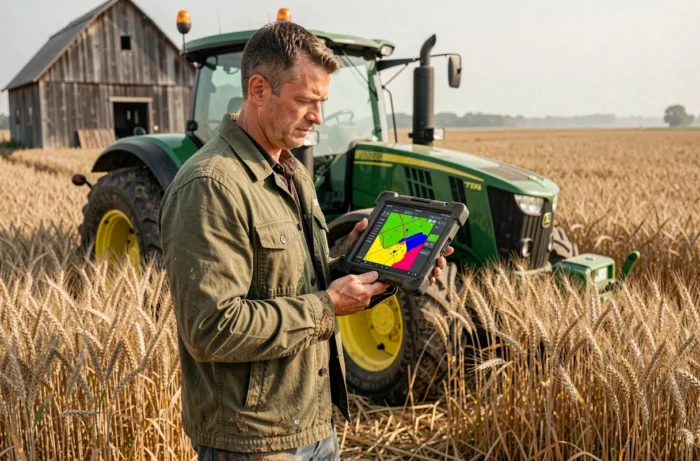
The management of a connected agricultural fleet is based on a simple principle: each machine generates usage data (position, engine hours, consumption, alerts) which, once centralized, allows for managing the fleet with a precision that manual tracking cannot achieve. Tractors, harvesters, sprayers, or trailers equipped with sensors become sources of actionable information for maintenance, planning, and cost control.
European Data Act and access to machine data: what changes for operators
Since September 12, 2025, the European regulation (EU) 2023/2854, known as the Data Act, fundamentally alters the relationship between the manufacturer of a connected machine and its user. Agricultural operators can now request the usage data of their equipment free of charge and have it transmitted to a third party: independent repairers, software integrators, or fleet management platforms.
This right of access concerns raw data and metadata necessary for their exploitation (GPS position, operating states, engine hours, technical alerts). However, indicators calculated by the manufacturer’s proprietary algorithms may remain excluded from the scope. An operator wishing to centralize data from machines of different brands on a third-party platform like moovement.fr must therefore contractually verify which data is actually exportable and in what formats.
For equipment placed on the market after the regulation comes into effect, it mandates a “design-for-access”: the machine must be designed from the outset to allow data extraction. This interoperability criterion should be included in the specifications when renewing the fleet, just like fuel consumption or guidance accuracy.
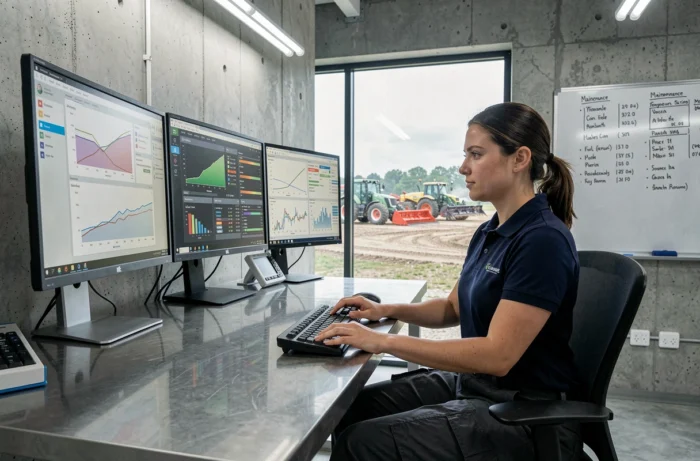
Accessible data and proprietary data: distinguishing what the fleet actually reports
Not all information displayed on a manufacturer’s portal is equivalent. Effective fleet management requires classifying data into two distinct categories.
- Raw and pre-processed data: GPS coordinates, sensor readings (temperature, pressure, engine speed), hour meters, fuel levels, error codes. They are covered by the Data Act and must be accessible to the user.
- Derived indicators: predictive maintenance recommendations, wear scores, route optimizations calculated by the manufacturer’s algorithms. These data often remain proprietary and are not necessarily transferable.
- Contextual metadata: timestamps, machine identifiers, firmware versions, recording conditions. They are necessary for properly exploiting raw data on a third-party platform.
This distinction has a direct impact on the choice of management software. A platform that aggregates only manufacturer streams via their official APIs will only have access to the data that each brand agrees to share. A system that retrieves raw data via independent telematics units offers more latitude but requires additional installation on each machine.
Specifications for agricultural fleet management software
The market offers solutions ranging from simple GPS tracking to comprehensive platforms integrating maintenance, planning, and reporting. Before subscribing, three technical criteria deserve particular attention.
Multi-brand interoperability
A typical operation uses machines from different manufacturers. The software must aggregate data from the entire fleet without forcing the operator to juggle between multiple portals. Check the list of compatible brands, supported protocols (ISOBUS, manufacturer API, OBD units), and the ability to integrate future equipment.
Preventive maintenance and alerts
The value of a connected platform is measured by its ability to turn data into concrete actions. Good software triggers alerts on critical thresholds (engine hours before service, consumption anomaly, recurring error code) and generates a maintenance schedule tailored to the actual use of each machine, not to a fixed theoretical interval.
Export format and portability
Dependency on a software publisher poses the same risks as dependency on a manufacturer. Demand standard export formats (CSV, JSON, open API) to maintain the ability to migrate to another solution without losing the fleet’s history.
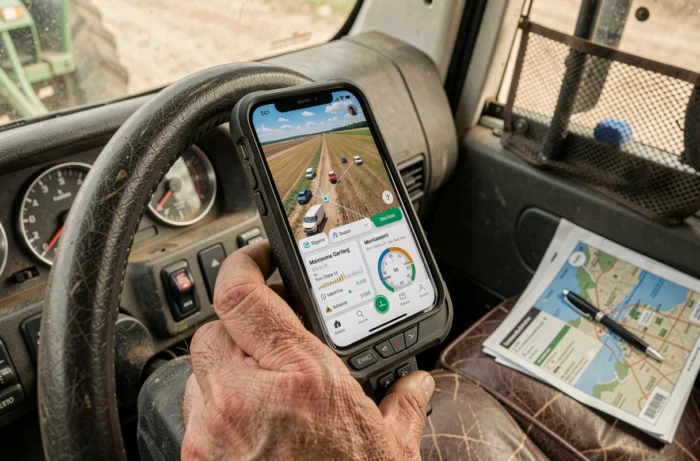
Technological lock-in: the risk to anticipate over time
The Data Act also regulates lock-in practices. The regulation provides rules against contractual clauses that would prevent the user from changing data service providers. In practice, an operator who centralizes several years of readings on a single platform must ensure that this data remains retrievable if the contract ends.
The most common trap concerns long-term contracts associated with the purchase of equipment. Some manufacturers offer a telematics subscription integrated into the financing of the machine. The data collected during the contract period must remain accessible after its term. Check this clause before signing.
Another point concerns the longevity of telematics units. An embedded sensor whose firmware is no longer updated becomes a weak link in the system. When evaluating a solution, ask about the hardware support policy over the expected lifespan of your machines, which often exceeds the duration of a software contract.
Connected management of an agricultural fleet is not just a technical issue: it is primarily a contractual issue. The European regulatory framework now gives operators the legal means to demand the portability of their data. It remains to be explicitly stated in every purchase contract and every software subscription.