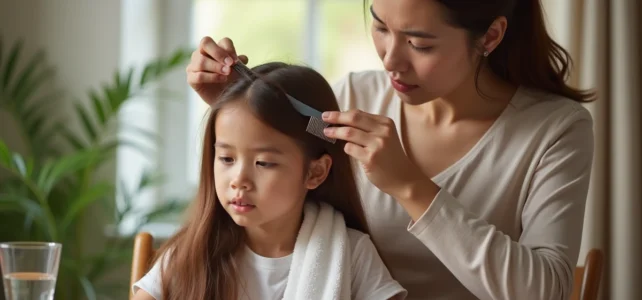
Your child is scratching their head, you spot tiny dark bugs near the scalp, and the word “flea” immediately comes to mind. In the vast majority of cases, the parasites that infest human hair are not fleas but head lice.
This confusion between fleas and lice affects the choice of treatment, and a wrong diagnosis leads to unnecessary actions, sometimes irritating for the scalp. Understanding the difference allows for quick action with the right products.
You may also like : Discover how to navigate effectively through the Business Hack sitemap
Fleas or head lice: why the confusion changes everything
Fleas (of the genus Ctenocephalides) live on pets, jump onto humans, and bite, especially around the ankles and legs. They do not lay eggs in hair and do not settle there permanently.
Head lice (Pediculus humanus capitis), on the other hand, cling to hair using adapted claws. They lay nits glued to the root and spend their entire life cycle on the human scalp.
Further reading : How to Watch Ozpov Video Streaming Easily and Safely
Have you noticed localized itching behind the ears or at the nape of the neck? This is the typical sign of a lice infestation, not fleas. Fleas bite the body, lice infest the hair. This distinction directly guides you to the correct care protocol.
If you want to delve deeper into the subject, a detailed guide on treating fleas in hair helps to better understand the situations where fleas can actually reach the scalp, particularly in people living with heavily infested animals.
Naturally suffocating treatments for scalp parasites
In recent years, so-called “suffocating” protocols have gained ground against chemical lotions. The principle is simple: coat the parasites in a thick oily substance to deprive them of air.

Vegetable oil treatment under a cap
Coconut oil or olive oil, applied in a thick layer over the entire scalp, forms the basis of these treatments. The head is then covered with a shower cap and left on for several hours, ideally overnight.
The oil suffocates adult parasites without irritating the scalp. The next morning, a regular shampoo followed by a thorough rinse is enough to remove the oily residue. This step should be repeated a few days apart to target any parasites that have hatched in the meantime.
Meticulous combing with a fine-toothed comb
The oil treatment alone is not enough. Combing with a very fine-toothed comb (preferably a metal lice comb) remains the essential complementary action. Strand by strand, from root to tip, dead parasites, nits, and residues are removed.
Without systematic combing, the nits remain stuck and the infestation resumes. Plan a combing session after each application of oil, then check every two to three days for at least two weeks.
Vinegar on the scalp: what this method really does
White vinegar or apple cider vinegar appears in almost all grandmother’s remedies. Its real role is more limited than one might think.
Vinegar helps to loosen nits stuck to the hair shaft due to its acidity. However, it does not kill adult parasites and has no effect on still viable eggs. Using it alone, without a suffocating treatment or combing, solves nothing.
The correct method is to apply a mixture of warm water and vinegar (in equal parts) after the oil treatment, then comb immediately. Vinegar facilitates combing but does not replace treatment.
Be cautious with prolonged or overly concentrated vinegar baths. The scalp, especially in children, can react with redness or irritation. A quick rinse after combing limits this risk.
Flea and lice prevention: actions that really reduce the risk
Prevention relies on two distinct axes depending on the targeted parasite.
Against fleas in the home
Since fleas come from pets, prevention involves regular treatment of the cat or dog and their environment. Here are the priority actions:
- Treat the animal with an appropriate anti-parasitic (spot-on, tablet, collar) according to the veterinarian’s recommendations, adhering to the renewal schedule.
- Frequently vacuum the animal’s sleeping areas, carpets, and baseboards, where larvae and flea eggs hide.
- Wash cushions, blankets, and beds at high temperatures to eliminate larval stages that resist simple brushing.
Fleas lay eggs in the environment, not on humans. If the home and the animal are treated, the risk of human bites decreases significantly.
Against head lice in children
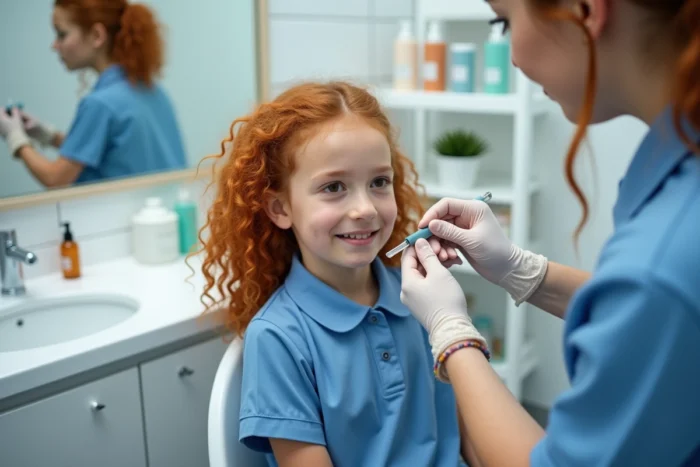
Lice are transmitted through direct contact, head-to-head, or by sharing hats, scarves, and hairbrushes. Communities (schools, daycare centers) are the primary places of contamination.
- Check the child’s scalp once a week during the school year, especially behind the ears and at the nape of the neck.
- Tie long hair back to limit hair contact between children.
- Avoid sharing brushes, combs, hats, and headphones among peers.
- Apply a few drops of lavender essential oil (diluted in a vegetable oil) on the nape of the neck, a traditional repellent often mentioned, ensuring there is no allergic reaction beforehand.
Regular monitoring and acting at the first signs limit the spread. A louse spotted early can be treated with a simple suffocating protocol. An infestation established for several weeks requires more persistence.
When natural remedies are no longer sufficient
Suffocating methods and combing work well on moderate infestations detected quickly. If itching persists after two weeks of rigorous treatment, or if scratching lesions become infected, medical advice is necessary.
The pharmacist can guide you to dimethicone-based lotions (a silicone that also acts by suffocation, without neurotoxic insecticides). The doctor intervenes in cases of skin superinfection or allergy to flea bites in someone living with infested animals.
The key remains the rigor of the protocol rather than the multiplication of products. A well-conducted suffocating treatment, combined with regular combing and environmental cleaning, covers the vast majority of situations, whether the parasite in question is a louse or, more rarely, a stray flea in the hair.