
We open the application, enter our morning blood sugar, and after three days, we encounter a screen that asks for a subscription to export any report. This scenario is regularly described by diabetic patients regarding 123santemag and other similar tracking tools. Before subscribing, it’s better to understand what the displayed price actually covers, the value of the proposed tracking, and where the clinical limits of this type of solution lie.
Real Glycemic Gains from Tracking Applications like 123santemag
The first instinct when evaluating a diabetes application is to look for evidence of effectiveness. In this area, the published results are disappointing for most digital diabetes management platforms.
Further reading : Everything You Need to Know About the Banking Universe: Tips, News, and Essential Information
The analysis by the Peterson Health Technology Institute, published in 2024, scrutinized telemonitoring and behavioral modification tools dedicated to diabetes. Its conclusion is clear: the gains on HbA1c are low and not sustainable for the majority of these solutions. Worse, the evaluated programs increase net healthcare costs compared to usual care.
The only cases where a significant benefit has been observed involve very unbalanced patients (high HbA1c) who are starting insulin, or remission efforts through nutritional ketosis. This is far from the typical profile of a user downloading a consumer app to log their blood sugars.
You may also like : Everything You Need to Know About Alain Bauer's Privacy and Wife in 2026
To delve deeper into the pricing and business practices, a detailed analysis is available on the diabetes application 123santemag on Santé au Quotidien, which breaks down the subscription tiers and the hidden costs of the freemium model.
123santemag does not publish any clinical study specific to its tool. No independent effectiveness data is available for this particular application. Without external validation, we remain in the realm of a digital notebook, not a medical device.

Freemium Model of Diabetes Applications: What the Price Hides
The advertised free access on stores is a calibrated illusion. You can access manual entry and a limited history without paying. As soon as you want to utilize your data (custom alerts, PDF export for your endocrinologist, sharing with a caregiver), a subscription becomes mandatory.
This mechanism is not unique to 123santemag. Almost all blood sugar tracking applications segment their offerings into several tiers. The intermediate version, which meets the needs of an insulin-dependent patient, costs significantly more than the entry-level price highlighted.
Points to Check Before Subscribing
- Does the price displayed on the store correspond to the monthly subscription or the annual rate divided by month? The difference can be significant.
- Are data sharing functions with a healthcare professional included in the basic tier or reserved for the premium offer?
- Does the application have certified medical device status (minimum Class IIa CE marking)? This status conditions the reliability of the algorithms and the possibility of reimbursement.
- Are health data hosted on a certified HDS (Health Data Hosting) server in France?
The regulatory status changes everything about justifiable pricing. A certified medical device application incurs development, audit, and maintenance costs that are much higher. If 123santemag does not claim this status, its premium price is difficult to justify against competitors who do go through this certification process.
Scams and Identity Theft Surrounding Diabetes Health Applications
The French Diabetes Federation has alerted to the proliferation of fraudulent devices in the diabetes ecosystem. Connected watches claiming to measure glucose without a prick, cloned applications that collect personal data: the market attracts unscrupulous players.
Before entering any blood sugar result into an application, check three concrete elements:
- Is the publisher identifiable (company name, address, SIRET number for a French company)?
- Do the general conditions specify the duration of commitment, the terms of cancellation, and the fate of data in case of account deletion?
- Is the application listed in an official reference (digital health space, My Health Space) or has it been evaluated by a recognized institution?
An application absent from any official reference is not necessarily fraudulent, but it offers no institutional guarantee. Feedback varies on this point: some users report satisfactory tracking with non-referenced tools, while others have noted inconsistencies in average glycemic calculations.
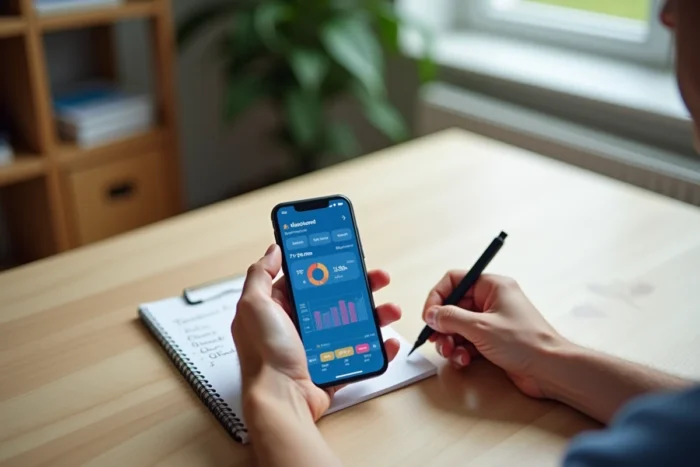
Free Alternatives and Validated Tools for Glycemic Tracking
Rather than paying a subscription for a tool without proven effectiveness, one can turn to solutions linked to medical equipment. Applications associated with continuous glucose monitors (FreeStyle Libre from Abbott, Dexcom) are included in the device price and offer much richer tracking than a simple manual entry notebook.
For patients who do not use a continuous monitor, applications like mySugr or Diabetes:M offer functional free versions. Their advantage: large user communities, regular updates, and for some, direct integration with glucose meters via Bluetooth.
What Really Matters in Choosing a Diabetes Application
The determining criterion is not the interface or the price. It’s the tool’s ability to transmit actionable data to the healthcare team. A standardized export (AGP format for continuous monitors, or structured PDF for capillary blood sugars) is worth more than all the colored curves in the world.
A tool that does not communicate with the caregiver remains a gadget. If the chosen application does not allow sharing a readable report in consultation, it does not fulfill its primary function. It is on this criterion that 123santemag, like many competitors, should be evaluated before any price considerations.