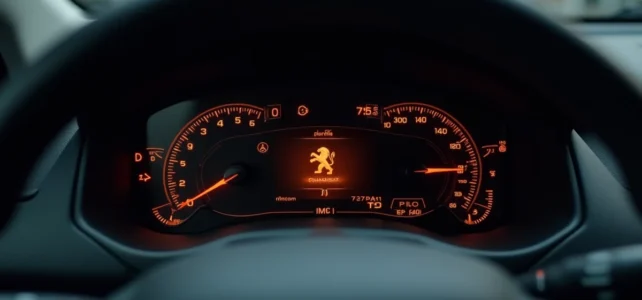
An orange warning light comes on the dashboard of your Peugeot 5008 during a city drive, without any particular symptoms while driving. You brake normally, the engine runs, but this little amber light refuses to turn off. The temptation to ignore it is strong, especially when nothing seems abnormal. However, on the 5008, orange warning lights cover very different situations, from a simple maintenance reminder to an anti-pollution fault that can lead to the immobilization of the vehicle.
Peugeot 5008 Anti-pollution Light: Why It Doesn’t Always Indicate the Engine
We instinctively associate the orange “engine” light with a mechanical failure. On recent 5008 models, this indicator is much more often triggered by the anti-pollution system than by the engine itself. The AdBlue system, the particulate filter (DPF), and the EGR valve are the three main sources of illumination.
Recommended read : Trends and Inspirations: Discover the Latest in Jewelry and Accessories
The most common case in the workshop concerns AdBlue. When the tank level drops or a quality sensor detects an anomaly, a countdown before immobilization may appear on the dashboard screen. This is not just a simple warning: if you ignore the message, the vehicle will refuse to restart after turning off the ignition.
To accurately identify the fault in question, it is recommended to consult the list of orange warning lights for Peugeot 5008 before going to the dealership, if only to describe the correct symbol to the technician.
See also : Understanding Mortgage Release Fees: Steps, Costs, and Tips to Know
The DPF presents a different problem. On short and repeated urban journeys, the filter does not reach the necessary temperature for its automatic regeneration. The light comes on, sometimes accompanied by a loss of power. A sustained drive on the highway for about twenty minutes may be enough to initiate a regeneration cycle, but if the differential pressure sensor is faulty, no cleaning will resolve the issue.

ABS and Orange Braking Light on 5008: A Relative Urgency
An orange light related to braking often causes more stress than an engine warning. On the 5008, the orange ABS light indicates that the anti-lock system is disabled. Conventional braking remains fully operational.
In practical terms, you lose anti-lock assistance in the event of an emergency stop, which increases the stopping distance on wet roads. The most documented cause remains a dirty wheel sensor or a corroded connector at the hub.
- ABS sensor clogged with brake dust or mud, common after a winter in rural areas. A cleaning with brake cleaner is sufficient in most cases.
- Oxidized electrical connector, especially on vehicles over five years old. Check the condition of the pins before ordering a new sensor.
- Cut or pinched wire due to driving over a pronounced speed bump or a shock under the car. A visual inspection of the harness can locate the break.
Before replacing an ABS sensor, an OBD diagnostic is essential to confirm which wheel is faulty. Blindly replacing parts is expensive and does not guarantee the resolution of the problem.
OBD Diagnosis Before Parts Replacement: The Field Method
A common reflex among 5008 owners is to erase the fault code with the scanner to turn off the light. The light goes off, you drive peacefully for a few days, then it comes back. Erasing a fault code without addressing the cause is like disconnecting a smoke detector.
The reliable approach follows a precise order. First, connect a compatible OBD2 scanner (consumer-grade devices read generic P0xxx codes, but some Peugeot faults require a PSA-compatible tool to access manufacturer codes). Record the code(s), then check the real-time data: temperatures, pressures, sensor voltages.
Checks to Make Before Ordering a Part
The sensor and electrical harness-oriented diagnosis has become the norm on recent vehicles. Before replacing an AdBlue injector or a temperature sensor, check the continuity of the wire between the sensor and the ECU with a multimeter. A corroded connector creating a false contact can generate exactly the same fault code as a dead sensor.
- Visually check the condition of the connectors (green or white traces = oxidation).
- Measure the resistance of the implicated sensor and compare it to the manufacturer value.
- Check for short circuits or breaks in the harness with a multimeter in continuity mode.
- For an AdBlue fault, also check the actual level of the tank (the onboard gauge can lie if the float sensor is clogged).
Feedback varies on this point, but several independent technicians find that a significant portion of persistent orange lights on diesel 5008s comes from a connectivity issue rather than a part that needs replacing.
Short Trips and DPF Clogging: The Trap of Urban Usage
The diesel 5008 primarily used in the city accumulates short driving cycles. The engine does not reach its optimal operating temperature, the DPF does not regenerate, and soot accumulates until the anti-pollution light is triggered.
The first-line solution is to take a highway trip of at least twenty minutes at a stabilized speed, between 2,500 and 3,000 rpm, to force a regeneration. If the light goes off, the problem was simply clogging. If it persists, the regeneration system itself is likely at fault (differential pressure sensor, DPF dedicated fuel injector, or DPF saturated beyond its cleaning capacity).
Clearing the fault without a cleaning drive only postpones the problem. The DPF continues to fill up, and eventually, complete replacement of the filter becomes the only option, at a significantly higher cost than a preventive intervention.
For a 5008 used exclusively in the city, the question of switching to a gasoline or hybrid engine arises seriously at the time of vehicle renewal. A diesel that never drives long enough to regenerate its DPF ends up costing more in maintenance than it saves in fuel.