
The choice between a 16A and 20A circuit breaker for an electric water heater depends on measurable parameters: the power of the device, cable section, and requirements of the NF C 15-100 standard. This article compares the two ratings based on their technical characteristics to identify which one suits your installation.
16A and 20A: Technical Comparison for Water Heaters
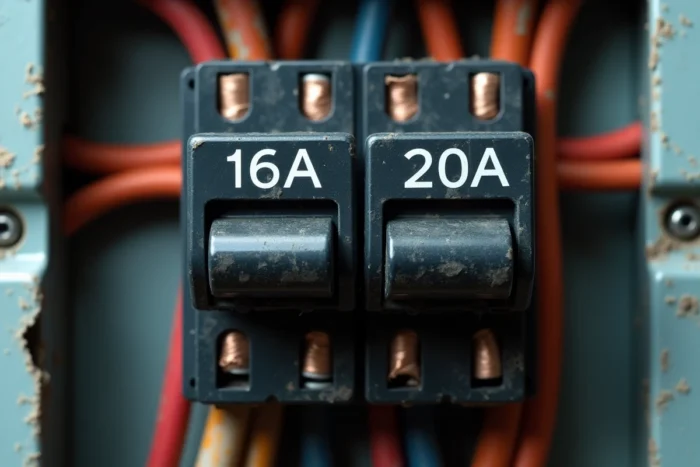
| Criteria | 16A Circuit Breaker | 20A Circuit Breaker |
|---|---|---|
| Maximum allowed current | 16 amperes | 20 amperes |
| Maximum supported power (230 V) | About 3,680 W | About 4,600 W |
| Minimum required cable section | 1.5 mm² | 2.5 mm² |
| Common use for water heaters | Small tanks (less than 2,000 W) | Standard and high-capacity tanks |
| Compliance with NF C 15-100 (dedicated circuit for water heater) | Tolerated under conditions | Recommended rating by the standard |
The table highlights a significant difference in cable section. A 16A circuit breaker allows wiring with 1.5 mm², but the NF C 15-100 standard recommends a 20A circuit breaker with a 2.5 mm² cable for the dedicated circuit of an electric water heater. This combination provides a safety margin against current surges during heating.
Related reading : Fashion Trend: How to Choose the Perfect Accessories to Enhance Your Look
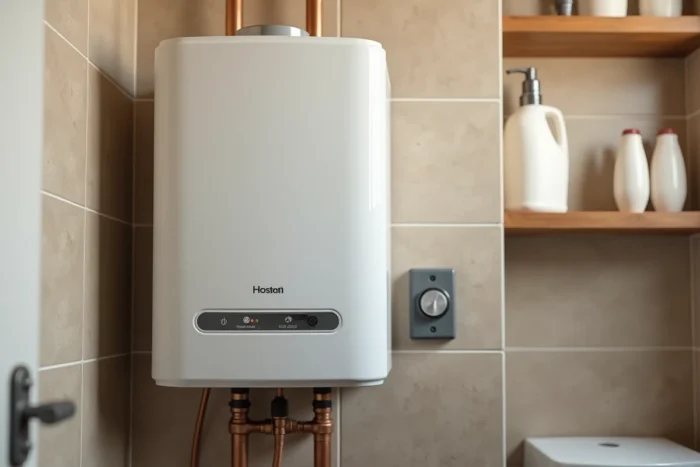
To determine which circuit breaker for electric water heater is suitable for your installation, the nominal power of the device remains the first parameter to check on the nameplate.
Recommended read : How to Prepare the Ideal Dinner for Optimal Daily Health
Power of the Tank and Actual Current: Why 20A is Essential
The majority of electric storage water heaters sold in France have a power rating between 1,500 W and 3,000 W. A 2,400 W tank in operation draws about 10.4 A at 230 V. A 3,000 W model reaches about 13 A.
With a 16A circuit breaker, a 3,000 W tank operates at over 80% of the circuit breaker’s capacity. This proximity to the trip threshold increases the risk of unexpected outages, especially when the network voltage fluctuates slightly downwards (which increases the current drawn to maintain power).
A 20A circuit breaker provides a margin of about 35% compared to the actual current of a 3,000 W tank. This margin absorbs micro-voltage variations and transient spikes at the start of the heating element, without ever approaching the trip threshold.
The Special Case of Small Water Heaters
Low-power instantaneous water heaters or small under-sink tanks of less than 1,500 W could theoretically operate behind a 16A. However, the NF C 15-100 standard requires a specialized circuit for each water heater, regardless of its volume. Even for a small device, the 20A rating remains the standard compliant configuration.
Cable Section and Differential Protection: Other Circuit Parameters
The rating of the circuit breaker is not chosen in isolation. It is part of a protection chain that includes the cable section and the upstream differential switch.
- The cable in 2.5 mm² is mandatory with a 20A circuit breaker. Using a 1.5 mm² cable under a 20A circuit breaker creates a risk of overheating, as the cable could reach its limit before the circuit breaker trips.
- A differential switch with 30 mA sensitivity must protect the circuit upstream. This device detects current leaks to the ground (contact with water, insulation failure of the heating element) and cuts off power before any risk of electrocution.
- The day/night contactor, controlled by the signal from the electricity supplier, requires its own protection circuit breaker (2A rating) on the panel. This module is separate from the 20A circuit breaker for the water heater itself.
Together, they form a cascade of protections: 30 mA differential, 20A circuit breaker for the tank, 2A circuit breaker for the contactor. Each element protects against a different type of fault.
Off-Peak Hours Reform and Contactor Adjustment: A Often Overlooked Parameter
The TURPE 7 reform, effective November 1, 2025, has modified off-peak hour periods for millions of households. The new periods are divided between night (11 PM – 7 AM, with a minimum of 5 consecutive hours) and day (11 AM – 5 PM, up to 3 hours). This reorganization directly impacts the operation of the water heater.
A poorly configured day/night contactor can trigger heating during peak hours, negating the tariff advantage. Checking the position of the contactor (AUTO, 0, forced operation) after a contract change or modification of time slots avoids unnecessary overconsumption.
This point is distinct from the choice of circuit breaker, but it illustrates that electrical protection and water heater control form a whole. A properly sized circuit breaker combined with a well-adjusted contactor ensures both circuit safety and optimization of the bill.
Water Heater Circuit Breaker: Sizing Errors to Avoid
Two common mistakes occur during the installation or replacement of a water heater.
The first is oversizing the circuit breaker (installing a 25A or 32A) thinking it will better protect the device. The result is the opposite: an oversized circuit breaker does not trip quickly enough in case of moderate overload, which exposes the cable to prolonged heating.
The second mistake is connecting the water heater to a circuit shared with other devices. The NF C 15-100 standard requires a dedicated circuit. A water heater connected to the same circuit as a washing machine, for example, accumulates currents and causes repeated tripping of the circuit breaker.
The 20A rating with a 2.5 mm² cable on a dedicated circuit remains the configuration that meets regulatory requirements for nearly all residential electric water heaters. A 16A is only justified in very specific low-power cases, and even in those situations, the 20A remains compliant and preferable due to its safety margin.