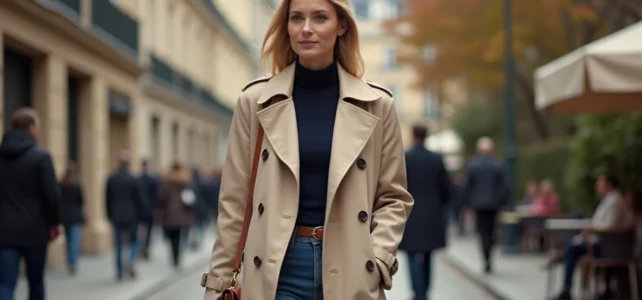
Wearing a polished outfit every morning without spending half an hour thinking about it relies less on the number of pieces in the wardrobe than on how they interact with each other. The quiet luxury trend, which has firmly established itself since 2023, has reshuffled the codes: chic style no longer comes from visible logos or flashy pieces, but from a coherence of colors, materials, and cuts that creates an immediate overall effect.
Restricted color palette: the most underestimated lever of a chic look
Most fashion advice emphasizes basics or capsule wardrobes. They overlook a more precise mechanism: staying within the same color family instantly unifies the silhouette. Pairing beige with ecru, medium gray with light gray, or navy with teal eliminates visual breaks that give an outfit a disjointed appearance.
Related reading : How to Watch Ozpov Video Streaming Easily and Safely
Several content creators specializing in style explain that the effect perceived as “luxurious” comes precisely from this chromatic continuity, rather than the price of the clothing. A pair of raw jeans worn with a navy sweater and a midnight blue coat creates a more polished impression than a multicolored look made up of more expensive pieces.
For everyday use, this means organizing your wardrobe by color families rather than by categories of clothing. When each piece in the same area of the closet works with its neighbors, publications like style-et-chic.fr regularly remind us, the time spent putting together an outfit drops to just a few minutes.
Recommended read : How to Change the Name on an SNCF Train Ticket: Practical Guide and Tips
Matte materials and textures: what distinguishes a casual outfit from an elegant look
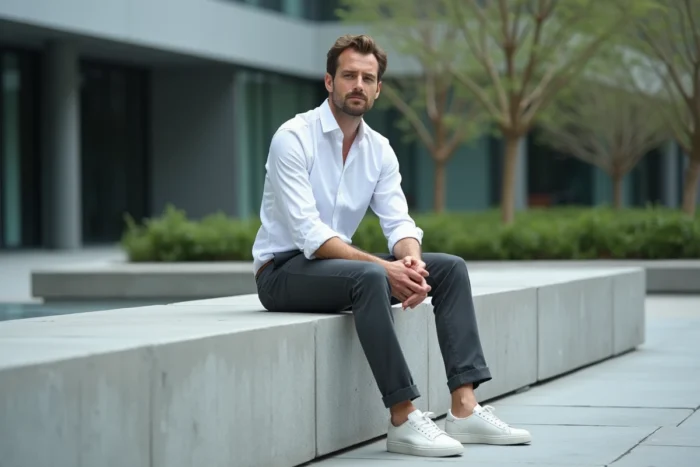
The choice of materials plays a role at least as crucial as the cut. Matte and dense fabrics appear more dressed up than shiny or overly thin fabrics, even with the same cut. A pair of matte crepe pants gives a completely different impression than satin polyester pants, and a cotton t-shirt with a sufficiently dense weight hangs better than a lightweight model that wrinkles after two washes.
A stylist details that tone-on-tone outfits in matte materials, to which only one contrasting layer (a structured blazer, a trench coat) is added, create a more assertive look without multiplying pieces. This principle works equally well in summer as in winter.
Three materials to prioritize for an effortless chic wardrobe
- Thick cotton or heavy jersey for everyday tops: they maintain their shape, don’t wrinkle, and withstand dozens of washes without losing their structure
- Fine merino wool for sweaters and scarves: lightweight, thermoregulating, it provides a neat finish without excessive bulk
- Washed linen for summer pieces: its slightly wrinkled appearance is perceived as casual-chic, provided you choose straight cuts rather than loose ones
On the other hand, fine synthetic materials (low-quality polyester, ultra-light viscose) tend to deform, catch light in an unflattering way, and age poorly. Investing in two or three pieces made of natural fibers effectively replaces five cheap pieces that lose their appeal in a few weeks.
Fitted cuts without being tight: the often misunderstood technical point
The notion of a “flattering” cut is everywhere, but it remains vague. What concretely produces an elegant effect is a garment that follows the line of the body without compressing it. The difference lies in a few centimeters: a blazer shoulder that falls exactly on the shoulder bone, pants whose waist sits in the right place without a tight belt, a dress whose side seam remains vertical when walking.
Many women buy clothes that are slightly too big for comfort or too fitted out of habit. In both cases, the silhouette loses clarity. Alterations at a tailor, even on inexpensive pieces, radically change the appearance. Having a blazer adjusted or pants shortened is inexpensive and transforms a standard piece into a custom one.
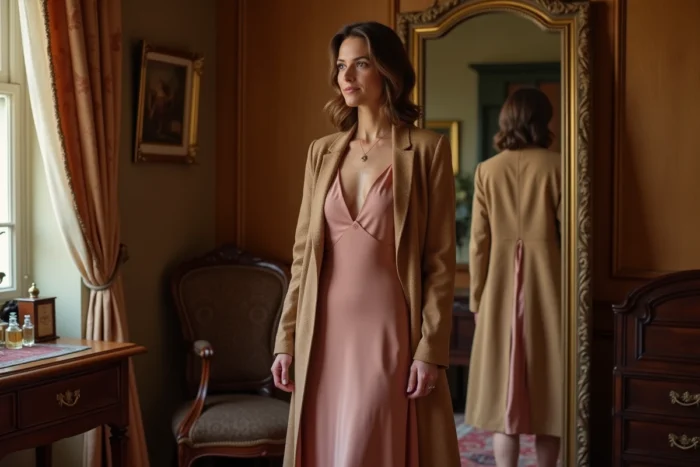
How to check the fit in front of the mirror
- The shoulder seams should end exactly at the edge of the shoulder, neither on the arm nor towards the neck
- The fabric on the back should not form horizontal wrinkles (too tight) or pockets of air (too loose)
- A well-cut pair of pants does not pull at the thighs when sitting and does not gape at the waist when standing
- The sleeve length of a jacket should allow about one centimeter of shirt or wrist to show
Accessories and final touch: the detail that anchors a style without overloading it
The common mistake is to pile on accessories to “enhance” a simple outfit. The result is often the opposite. One well-chosen accessory is enough to give character to a casual chic look: a watch with a simple dial, a quality leather belt, a pair of discreet earrings.
The choice of shoes weighs as much as the rest of the outfit combined. Clean, well-maintained shoes in matte leather or suede elevate any jeans-blazer combination to the level of a polished outfit. Conversely, worn or poorly maintained shoes drag down an otherwise well-thought-out ensemble.
Hairstyle and overall maintenance (nails, pressed clothes, absence of lint) also contribute to this impression of natural elegance. These are not cosmetic details: the overall look relies on the absence of visual friction points more than on the presence of standout pieces.
Ultimately, adopting an elegant look every day boils down to three structural decisions: reducing the color palette, selecting materials that stand the test of time, and having the cuts adjusted. The rest, including trends, is merely an optional layer placed on these foundations.